Supplement Packaging Boxes: Shelf Appeal Meets Compliance
Supplement packaging has to make the product easy to recognize on a crowded shelf while preserving enough clear, stable space for the approved label copy, barcode and usage information. For most bottles, jars and sachet packs, the practical starting point is a custom folding carton sized to the product, printed from controlled artwork and physically sampled before the full run.
JCL Packaging produces supplement and nutraceutical cartons within our custom printed boxes line. The available specification includes 250–400 gsm cardstock, CMYK and PMS offset printing, matte, gloss or soft-touch lamination, foil, spot UV, embossing and several folding-carton structures. The standard minimum order is 1,000 pieces per design, with a 3–5 day sample and 10–15 day mass-production window after sample approval.
Treat compliance copy as a fixed design input
Packaging production cannot decide which statements your market permits. The brand, its regulatory adviser and the approved artwork remain responsible for the required wording. The factory task is to turn that approved information into a repeatable printed carton without letting folds, glue areas, windows or finishing effects interfere with it.
That changes the order of design decisions. Before choosing foil or embossing, reserve panels for the final copy, barcode and any variable information your project requires. Then place branding around those fixed zones. If the approved wording changes after the dieline is complete, run a new pre-flight check instead of stretching text into the old layout.
Our pre-press team draws the structural dieline and checks supplied artwork before plating. Print-ready AI or PDF files should use outlined fonts, 300 dpi images, CMYK colors and PMS references for spot colors. The custom box dieline artwork guide explains how to separate cut, crease, bleed and artwork layers so the production file remains clear.
A physical sample is the safest approval point. Review the real type size, contrast, barcode area, panel order and opening direction in hand. Screen proofs are useful for content review, but they cannot show exactly how a crease, laminate or carton corner changes the finished reading experience.
Pick the carton structure around the product and packing line
The supplement format determines how much structure the carton needs. A lightweight bottle packed into an outer shipping case has different requirements from a glass jar, a multipack or a subscription kit.
| Product program | Practical carton direction | Why it fits |
|---|---|---|
| One lightweight bottle | Reverse-tuck or straight-tuck carton | Efficient flat shipment and a familiar retail opening |
| Heavier jar or fast hand-packing line | Auto-bottom carton | Pre-glued base opens quickly and adds support |
| Sachet or blister-style presentation | Sleeve or custom folding carton | Keeps the printed surface prominent around a compact product |
| Several bottles or a launch kit | Carton plus engineered outer pack | Separates retail presentation from transit protection |
Reverse tuck, straight tuck, auto-bottom, sleeves and two-piece cartons are all available within the printed-box line. Use our folding carton styles comparison to narrow the structure before requesting a dieline.
Do not ask the retail carton to perform every shipping job. If the box will travel through a courier network, place it inside a right-sized corrugated mailer or shipper. That keeps the folding carton focused on shelf communication while the corrugated layer handles the transport environment.
Decide whether the pack actually needs an insert
An insert is useful only when it controls movement or organizes multiple components. A single bottle in a correctly sized carton may not need a separate insert. Adding one without a clear function increases material, assembly and freight volume.
For a multipack, sample kit or premium presentation, define the insert as part of the whole packaging system. JCL’s corrugated mailer line supports corrugated dividers, molded pulp, foam and tissue, while rigid gift-box projects can use EVA foam, molded pulp, vacuum-formed trays, silk or corrugated inserts. The right route depends on product weight, shape, desired presentation and whether the insert belongs inside a folding carton, mailer or rigid outer box.
During sampling, check four simple points: the product does not rattle, the carton closes without pressure on the contents, the customer can remove the product without tearing the pack, and the complete unit still fits the planned shipper. Those observations are more useful than choosing an insert material from a catalog image.
Build shelf appeal from the base print outward
Supplement cartons often need strong category recognition, but more finishes do not automatically create more trust. Start with the base artwork and establish the color system first.
JCL runs CMYK offset printing plus PMS spot colors on Heidelberg CD102 and PM74 presses with CTP plate preparation. PMS spot inks are useful when a brand-critical color must remain consistent across a family of SKUs. Inside printing is also available when the opening experience needs instructions, a brand message or a color reveal.
After print is approved, choose one surface direction:
- Gloss lamination emphasizes shine and saturated graphics while creating a wipeable surface.
- Matte lamination lowers reflection and gives dense color fields a quieter appearance.
- Soft-touch lamination adds a tactile, low-glare layer for premium lines.
- Hot foil stamping creates an opaque metallic accent for a logo, seal or product tier.
- Spot UV adds local gloss against a matte base.
- Embossing gives selected artwork a raised tactile detail.
The best finish should reinforce the hierarchy already present in the artwork. A clear product name, controlled color family and readable information panels matter more than stacking foil, UV and embossing on the same face. Our matte versus gloss guide shows how the two most common surfaces behave under handling and photography.
A real factory sequence for supplement cartons
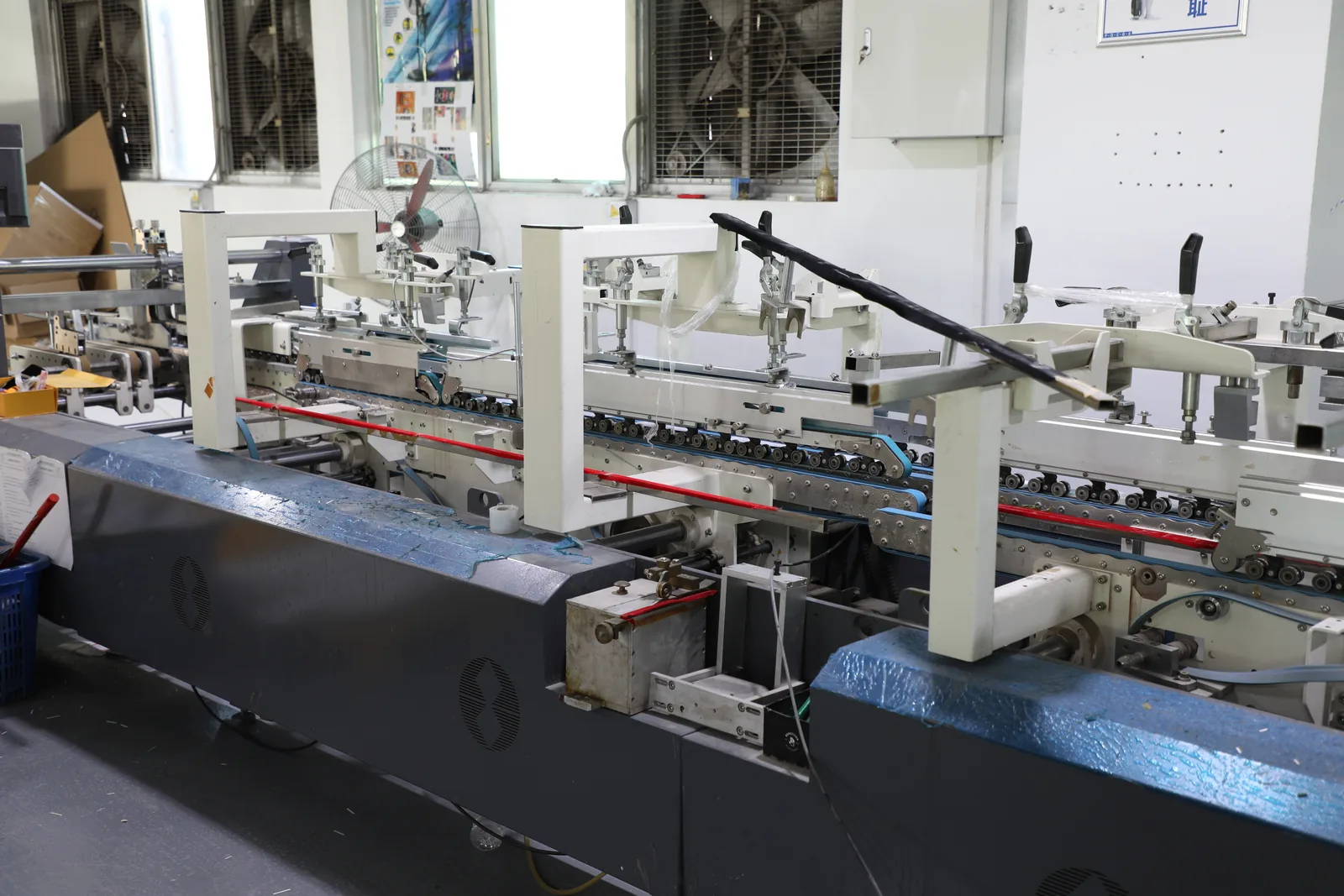
The factory photograph above shows JCL’s automatic folding-carton folder-gluer line. It represents one stage in a connected production sequence rather than a complete box appearing from a single machine.
The job begins with the approved dieline and artwork. CTP equipment prepares the printing plates, and the sheets run on Heidelberg offset presses for CMYK and PMS work. If specified, lamination or another surface finish follows. Automatic die-cutting creates the cut and crease geometry, and the folder-gluer forms and glues the carton consistently through the run.
Quality control continues from proofing to packing. JCL uses a color-management workflow, in-line checks and a final AQL inspection with photo reports before shipment. The press, die-cutting, gluing, lamination and testing equipment are listed on our factory capabilities page.
| Planning item | JCL folding-carton specification |
|---|---|
| Paperboard | 250–400 gsm white or art cardstock, kraft, metallic or specialty stock |
| Printing | CMYK offset plus PMS spot inks; water-based or UV varnish available |
| Finishing | Matte, gloss or soft-touch lamination, foil, spot UV and embossing |
| MOQ | 1,000 pieces per design |
| Physical sample | 3–5 days |
| Production | 10–15 days after sample approval |
| Quote response | Within 24 hours after a complete brief |
| Delivery | Express, air, LCL/FCL sea freight and optional DDP door-to-door |
This table is a planning baseline, not a price promise. Finished size, stock, print coverage, finish, structure, quantity and destination all belong in the same quote.
Use the sample to approve the complete system
A useful supplement-packaging sample review is broader than checking whether the logo color looks correct. Open and close the carton several times. Confirm the opening direction matches the panel sequence. Place the actual bottle, jar or sachets inside. Check that important copy does not cross a crease or disappear under a flap. Put the retail carton into the intended mailer or shipper and confirm that the full pack is not carrying unnecessary empty space.
For confirmed orders, the pre-production sample is free; the buyer covers courier cost. Production starts after sample sign-off. If the launch date is fixed, include it in the first inquiry so the factory can confirm a firm schedule rather than treating delivery as an afterthought.
Send a brief that can become a production file
A complete supplement-box inquiry should include:
- Product dimensions, weight and container type
- Finished carton size, if already known
- Quantity for each design or SKU
- Approved artwork or the copy that will populate the dieline
- Preferred carton structure
- Required stock, print colors and finish direction
- Whether an insert or separate corrugated shipper is needed
- Destination postal code and required arrival date
If the structure is undecided, send the product dimensions and reference packaging rather than guessing. The engineering team can return a fitting dieline and compare practical carton directions before the sample is made.
Good supplement packaging is not a contest between shelf appeal and information space. The structure should protect the product, the artwork should preserve the approved copy, and the finishes should strengthen a clear hierarchy instead of covering it. Send your supplement packaging brief for a factory-direct quote, structural dieline and physical sample plan.