Matte vs Gloss Lamination: Which Finish Fits Your Brand
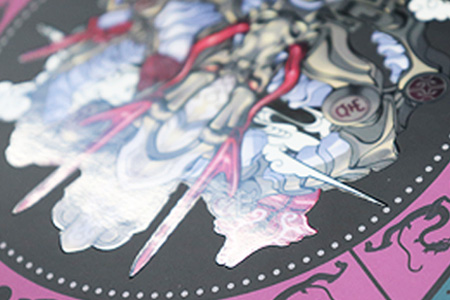
Lamination is the clear film we bond over printed board, and it does two jobs at once: it protects the ink from scuffs and moisture, and it sets how light behaves on your box. Matte vs gloss lamination is therefore not a style preference to delegate — it decides whether your colors pop or calm down, whether fingerprints show, and which price tier your box reads at. Choose it deliberately.
Here is how we walk buyers through it, with the pairing rules from thousands of runs on our laminating lines.
What lamination actually does
Printed ink sits on the surface of the board and is fragile: it scuffs in transit, fingerprints under handling, and absorbs moisture. Lamination bonds a thin film over the whole sheet — ink locked under plastic, edges sealed. Every folding carton and most rigid box wraps in our factory get laminated as a default; the choice is only which film.
- Gloss film reflects light directly: colors look brighter and more saturated, surfaces wipe clean with a cloth
- Matte film scatters light: colors look deeper and calmer, text stays readable under spotlights, and the surface hides everyday handling
- Soft-touch film is matte plus a velvet texture — the premium tier we cover separately in What Is Soft-Touch Lamination?
Head-to-head comparison
| Gloss | Matte | |
|---|---|---|
| Color appearance | Brighter, more saturated | Deeper, slightly muted |
| Under store lighting | Glare and hot spots | Stays readable |
| Fingerprints | Show clearly | Fade into the finish |
| Scuff visibility | Scuffs shine | Scuffs show as light marks on dark board |
| Wipeability | Best | Good |
| Cost | Baseline | Baseline (same tier) |
| Reads as | Commercial, food, value | Premium, considered, modern |
There is also a third option: UV varnish — a coating printed over the sheet like an ink, in gloss or matte, at a lower cost than film. The trade-off: varnish protects less than film (it cracks on folds and scuffs faster) and cannot carry the soft-touch texture. It suits inner cartons, short-shelf products and budget runs; anything that travels or sits on a shelf earns its film.
Two facts surprise most buyers. First, matte and gloss cost the same at our press — the choice is pure brand strategy, not budget. Second, neither hides everything: gloss shows fingerprints, matte shows light scuffs on very dark board. If your design is black or deep navy and travels alone to consumers, that is the one case we steer to soft-touch (see the pairing rules below).
The category pairing rules
These are the defaults that keep proving out across orders:
- Beauty, skincare, premium electronics → matte or soft-touch. The categories where fingerprints and glare read as “cheap”; the muted surface photographs beautifully under studio light.
- Food, supplements, fast-moving consumables → gloss. Wipeable surfaces matter more than mood, and saturated color drives shelf attention for value packs.
- Bright, colorful, photographic artwork → gloss. Full-bleed illustration and high-key photography gain vibrancy from the direct reflection.
- Deep, dark, minimal artwork → matte or soft-touch. Dark board plus matte depth is the modern luxury signature; gloss on black shows every touch.
- Trade-show and salesrep samples → matte. Handled constantly under uncertain lighting; matte survives the tour.
- Wine and spirits gift boxes → matte with textured or soft-touch film. Deep tones plus tactile surface match the ceremony of the category — see our wine box line.
- Subscription boxes → soft-touch. Opened, handled and kept; the finish has to survive months of shelf life at home.
Where the film goes in each product
Lamination timing and surface differ by product, and it explains quotes better than any adjective:
- Folding cartons: sheets are laminated before die-cutting and gluing, so the film wraps every edge and crease — maximum protection, and the reason creases crack less.
- Rigid box wraps: the printed and laminated sheet is wrapped around greyboard, and our visual positioning machine registers the artwork to the board within fractions of a millimeter — the film ends up exactly where the design intends, lid after lid.
- Paper bags: art paper is laminated before the bag is folded and glued, with the film taking the load at the turn-top — one reason laminated bags outlast uncoated ones under weight.
What if I skip lamination?
Skipping is legitimate in three cases: uncoated kraft aesthetics (the raw, eco texture is the design), tight budget inner packs that live inside an outer shipper anyway, and UV varnish as the middle path described above. What you give up is scuff and moisture protection — fine for a box that never travels alone, risky for one that does. If you are unsure which side your product falls on, describe the journey in your quote request and the recommendation comes back with the price.
The combos that earn their extra pass
Lamination is also the base layer that makes premium finishes work:
- Matte + gloss spot UV — the logo or pattern rises in gloss against the matte body; the highest-contrast trick in carton work, and a standard on our custom printed boxes
- Matte or soft-touch + hot foil — foil on a matte surface reads as embossed metal rather than shiny sticker; the default for rigid gift boxes
- Gloss + vibrant CMYK — the value-play combination for volume retail
Each combo adds a press pass, so it is priced as a line item — visible in the quote, never hidden in a “handling” charge.
One more decision hides inside the choice: lamination covers the whole sheet, so it protects artwork you did not emphasize too. A barcode panel, a compliance line, the underside flap — gloss or matte, film guards them all, where spot treatments would leave them exposed.
Decide on a proof, not a screen
Screens render matte and gloss almost identically, which is why the decision made in a design file is wrong about half the time. We laminate both versions of your artwork on the pre-production sample — same dieline, same board, two films side by side. Hold them under the lighting your customers will actually see, then choose. Sampling runs 3–5 days and is free with your confirmed order; the finish you pick today is locked into the quote tier you will reorder for years.