Candle Packaging Boxes: Rigid Boxes That Survive the Courier
Candle packaging boxes have to do two jobs at once: present a fragrance product like a gift and keep the jar fixed inside the pack from fulfillment shelf to customer doorstep. The strongest starting point is usually a rigid box built around the candle dimensions, paired with an insert that controls movement instead of relying on decorative tissue alone.
For a DTC candle brand, the correct specification is not simply “a luxury box.” It is a connected system: rigid board thickness, opening style, insert material, surface finish and the outer shipping plan. This guide explains how to choose each part using the same factory constraints that determine sampling time, MOQ and production lead time.
Start with the shipping path, not the decoration
A candle sold from a boutique shelf faces a different journey from one picked, packed and sent through a courier network. Before choosing foil color or wrap paper, define how the package will move:
- Retail-first candle: the presentation box is handled mainly on shelves and at checkout. A compact lid-and-base rigid box or folding carton can prioritize display efficiency.
- DTC single candle: the presentation box needs a fitted insert and a planned outer shipper. The insert should hold the jar away from the rigid walls instead of letting it move inside an oversized cavity.
- Gift set: a book-style magnetic, drawer or lid-and-base rigid box can organize two or more items with separate insert cavities.
- Subscription or replenishment order: a corrugated mailer may be the practical shipping layer, with the branded candle box nested inside.
This distinction prevents a common specification mistake: spending heavily on surface finishes while leaving the product loose inside the box. Finishes create perceived value; structure and fit protect that value.
Which rigid box structure fits a candle?
Our custom rigid boxes are available as lid-and-base, book-style magnetic, drawer and shaped constructions. Each creates a different unboxing sequence.
Lid-and-base boxes
A two-piece lid-and-base box is the simplest premium format. It gives the customer a clear reveal, works well for one jar and leaves broad surfaces for a centered logo. It is also easy to specify because the lid, base and insert can all be adjusted around one product footprint.
Book-style magnetic boxes
A hinged book-style box creates a slower opening moment and keeps the lid attached. It suits gift sets, candle-and-accessory combinations and launch kits where the inside lid may carry a message. The trade-off is more assembly and a more complex sample than a basic two-piece structure.
Drawer boxes
A sleeve-and-drawer format gives a controlled horizontal reveal. It can be effective for smaller candles, discovery sets or a candle paired with printed cards. The drawer clearance must be checked on the physical sample so it slides smoothly after wrapping and finishing.
| Candle program | Practical structure | Insert direction | Shipping layer |
|---|---|---|---|
| One premium jar | Lid-and-base rigid box | Paper cradle, molded pulp or EVA | Right-sized corrugated mailer |
| Two-item gift set | Book-style or lid-and-base | Separate fitted cavities | Corrugated shipper with limited empty space |
| Discovery set | Drawer or book-style | Multi-cavity paper, pulp or foam insert | Mailer sized to the complete set |
| Retail carton plus DTC shipping | Folding carton | Die-cut paper cradle | Branded or plain corrugated mailer |
The table is a decision framework, not a substitute for dimensions. Send the jar diameter, height, lid profile and weight so the structural dieline can be built around the real product.
Board thickness: enough strength without paying for dead weight
Rigid boxes use 1,200–2,000 gsm greyboard in 1–3 mm thicknesses, wrapped with printed or specialty paper. Most gift boxes use 1.5–2 mm board. Products above 2 kg or boxes above 30 cm on any side may benefit from 2.5–3 mm board, but thicker is not automatically better.
For candle packaging boxes, the insert and clearance often matter as much as adding board thickness. A jar held in a fitted cradle cannot gather the same momentum as a jar moving across an empty cavity. The better sampling question is therefore not “What is the thickest board?” but “Which board-and-insert combination holds this jar securely while keeping the box proportionate?”
That question is inexpensive to settle before production. We can compare board directions during the physical sample stage, then confirm the structure before the full run.
The insert is the protective engineering
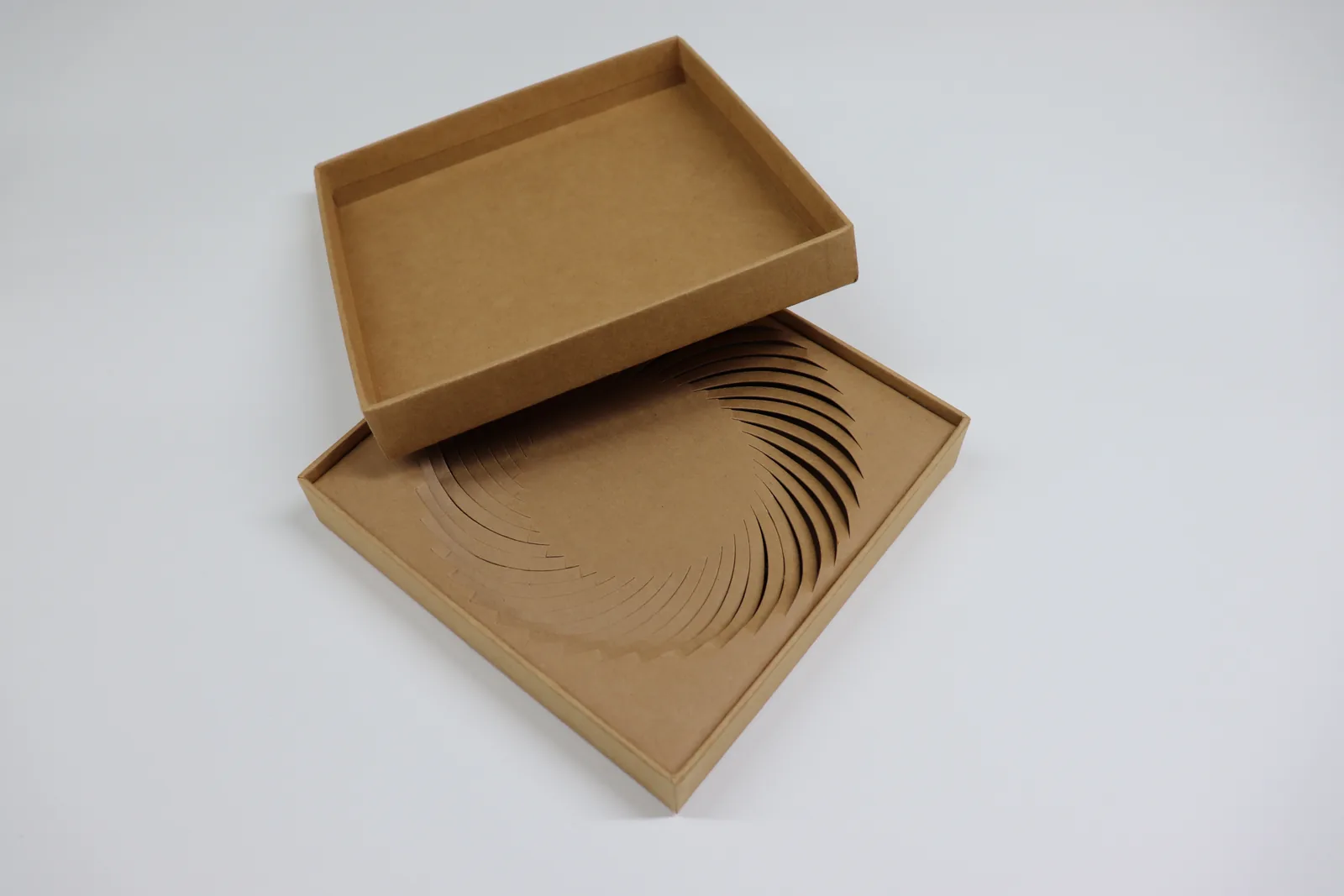
The factory photograph above shows a two-piece kraft rigid box with a precision-cut recyclable paper insert. Its concentric cut pattern demonstrates the key principle: the insert should be designed around the product footprint rather than filled with generic loose material.
Available insert options include:
- Molded pulp: a paper-based direction for brands that want a protective form with a natural material story.
- Corrugated or paper cradle: a practical mono-material option that can hold a jar while keeping the pack easy to separate for recycling.
- EVA foam: a precise premium insert for strong retention and a clean presentation.
- Vacuum-formed tray: useful for irregular product shapes at suitable order quantities.
- Silk-lined insert: a presentation-led option for gift tiers where the interior finish is part of the reveal.
The best insert is not selected from appearance alone. During sampling, check whether the candle can be placed and removed without excessive force, whether the lid closes without pressing the product, whether the jar remains centered after repeated handling, and whether accessories have their own controlled positions.
Finishes that sell fragrance without hiding structural problems
Candle brands often use tactile and low-glare finishes because the package is held close during the fragrance decision. The rigid-box wrap can use printed art paper, black card, metallic paper or specialty textured paper. Surface options include matte, gloss or soft-touch lamination, hot foil stamping, spot UV, embossing and debossing.
A focused finish system usually looks more premium than stacking every available effect:
- Soft-touch or matte lamination creates a low-glare base and helps the printed wrap resist handling marks.
- Hot foil stamping gives logos or fragrance names an opaque metallic accent, including on dark stock.
- Embossing or debossing adds a tactile mark without requiring another printed color.
- Spot UV works when a gloss detail needs to contrast with a matte body.
See our soft-touch lamination guide and embossing versus debossing comparison before approving the artwork layers. The finish should support the brand position while leaving enough time for a real physical sample.
What happens on the factory floor
A rigid candle box combines printing and converting stages rather than coming off one machine complete. The production path can include CTP plate preparation, CMYK or PMS printing on Heidelberg CD102 or PM74 offset presses, film lamination, foil or embossing, die-cutting, V-grooving, board assembly and visual-positioning wrapping.
The rigid-box visual positioning machine aligns the printed wrap to the greyboard within fractions of a millimeter. That alignment matters on a candle lid because a small centered logo gives the eye an immediate reference; inconsistent placement makes otherwise premium packaging look unstable. Automatic die-cutting and the final AQL inspection add repeatability and a documented release check before packing. More of this equipment is shown on our factory capabilities page.
MOQ, sample and production timeline
| Planning item | Rigid candle box |
|---|---|
| Minimum order quantity | 500 pcs per design |
| Physical sample | 5–7 days |
| Mass production | 12–18 days after sample approval |
| Quote response | Within 24 hours with a complete brief |
| Insert options | EVA, molded pulp, vacuum tray, silk, corrugated or paper |
| Delivery options | Express, air, LCL/FCL sea freight and DDP door-to-door |
The sample is the point to test fit, opening feel, wrap alignment, insert retention and the relationship between the presentation box and the outer shipper. Mass production begins after sample approval. For the complete sequence, use our custom packaging lead-time guide.
A better candle-box inquiry brief
To receive a useful structural recommendation instead of a generic price, send:
- Jar diameter, height, weight and lid profile
- Quantity per design
- Preferred opening style or reference image
- Whether the box is for retail, DTC shipping or a gift set
- Desired wrap paper and finish direction
- Insert preference, if any
- Destination postal code and required arrival date
If the insert material is undecided, send the product details and sustainability target. We can propose a paper, pulp, corrugated, foam or tray direction and show it in the sample rather than forcing the decision from a screen.
The right candle packaging box is not the one with the most decoration. It is the one that presents the jar deliberately, keeps every component in place and arrives with the unboxing sequence intact. Send the candle dimensions and project brief for a factory-direct quote, free structural dieline and physical pre-production sample.