Wine Shipping Box Dimensions: Packaging Guide for 1–6 Bottles
Wine shipping box dimensions should be engineered from the actual bottle, bottle count, insert and shipping path—not copied from a generic carton chart. JCL Packaging produces single-, two-, three-, four- and six-bottle wine boxes, but the finished dimensions remain custom because bottle height, body diameter, shoulder shape and presentation clearance change from project to project. The reliable starting point is the bottle itself, followed by the protective structure around it.
This guide explains what to measure, how rigid presentation boxes differ from corrugated wine shippers, and which production details must be approved before a winery, importer or gifting program places a bulk order.
There is no universal wine carton dimension
A “750 ml bottle” label describes capacity, not the outside geometry needed for packaging. Two bottles with the same capacity can have different shoulders, bases, necks and overall heights. Champagne-style bottles can also need a different neck and body allowance from other bottle profiles. For that reason, a supplier should not quote a final cavity or die line from bottle capacity alone.
Send these measurements for every bottle SKU:
- Overall bottle height from the base to the top of the closure.
- Maximum body diameter or width and depth at the widest point.
- Shoulder and neck profile where an insert may contact the bottle.
- Bottle weight when filled so the structure is designed for the shipped load.
- Bottle count and orientation: one, two, three, four or six bottles, upright or presented horizontally.
- Any accessories such as a booklet, opener or certificate that need their own compartment.
The finished internal size then includes the bottle envelope, the selected insert and the working clearance needed for loading and removal. The external size adds the walls of the chosen box structure. JCL’s structural team prepares the dieline before artwork, and the physical sample is made on the specified stock and finishes before mass production.
Dimension planning by bottle count
Bottle count changes both the footprint and the load path. Use the table as a planning framework rather than a list of standard millimeter sizes.
| Configuration | Dimension priority | Practical structure |
|---|---|---|
| Single bottle | Bottle height, widest body point and clearance around the neck | Rigid lid-and-base, magnetic hinged box or corrugated bottle shipper |
| Two bottles | Two bottle envelopes plus the center divider or twin cradle | Hinged rigid case, lid-and-base gift box or divided corrugated case |
| Three bottles | Stable divider layout and balanced carrying footprint | Rigid presentation case or heavy corrugated carrier |
| Four bottles | Divider strength, handle position and total filled weight | Corrugated carrier or rigid case |
| Six bottles | Stacking strength, bottle separation and master-carton handling | B-flute or C-flute corrugated carrier with dividers |
For presentation-led orders, custom wine boxes can use a lid-and-base structure, a hinged magnetic format or a multi-bottle carrier. For courier protection, a corrugated structure is usually the outer protection layer or the main shipper. The design decision should follow the sales channel: retail shelf, tasting-room gift, corporate presentation, wine-club shipment or direct-to-consumer delivery.
Rigid gift box or corrugated wine shipper?
A rigid wine box and a corrugated shipping box solve different jobs. A rigid box is a pre-formed presentation package made from 1200–2000 gsm greyboard, typically 1–3 mm thick, with a printed, specialty-paper, kraft or metallic wrap. It supports premium opening formats, foil branding, embossing and fitted inserts. JCL’s standard MOQ for wine boxes is 500 pieces per design, with 5–7 day sampling and 12–18 day production after sample approval.
A corrugated wine shipper is engineered around flute structure and transport handling. JCL offers E-flute, B-flute, C-flute and BC double-wall corrugated board across its corrugated mailer and shipper range. For multi-bottle wine carriers, B-flute or C-flute is the published material direction, while the final choice still depends on bottle count, filled weight and shipping conditions.
| Requirement | Rigid wine presentation box | Corrugated wine shipper |
|---|---|---|
| Primary job | Brand presentation and gifting | Courier, warehouse and transport protection |
| Published material | 1200–2000 gsm greyboard with paper wrap | E, B, C or BC corrugated board; wine carriers use B or C flute |
| Packed form | Pre-formed | Structure selected around the shipping and packing plan |
| Insert options | EVA foam, molded pulp, corrugated cradle, vacuum-formed tray | Corrugated cradle, dividers or other engineered insert |
| Standard MOQ | 500 pcs for wine boxes | 1,000 pcs for corrugated mailers and shippers |
| Standard production | 12–18 days after sample approval | 10–15 days after sample approval |
A premium program may use both: a rigid presentation box around the bottle and a right-sized corrugated outer shipper around the gift box. The outer dimensions should therefore be finalized only after the presentation box and its protective allowance are approved.
Inserts determine the usable cavity
The insert is not a decorative afterthought. It determines where the bottle contacts the package, how much movement is possible and how much space the finished box needs.
JCL’s published insert options include:
- EVA foam, cut to the product profile for a precise presentation fit.
- Molded pulp, a paper-based option for protective cradles.
- Corrugated cradles and dividers, particularly relevant to heavier and multi-bottle packs.
- Vacuum-formed trays for shaped product support.
The insert should be drawn around the real bottle measurements. A two-bottle box also needs the separator thickness included between the bottle envelopes. A four- or six-bottle carrier needs each bottle isolated so the glass does not become the structural divider. If multiple bottle profiles share one program, confirm whether one insert can safely fit all of them or whether separate cavities are required.
For sustainable projects, JCL also offers recycled kraft, FSC-certifiable paperboard options, soy-based inks and plastic-free structures. The correct option depends on the requested presentation, protection and recyclability target rather than on one material claim in isolation.
Real factory evidence: inspection before shipment
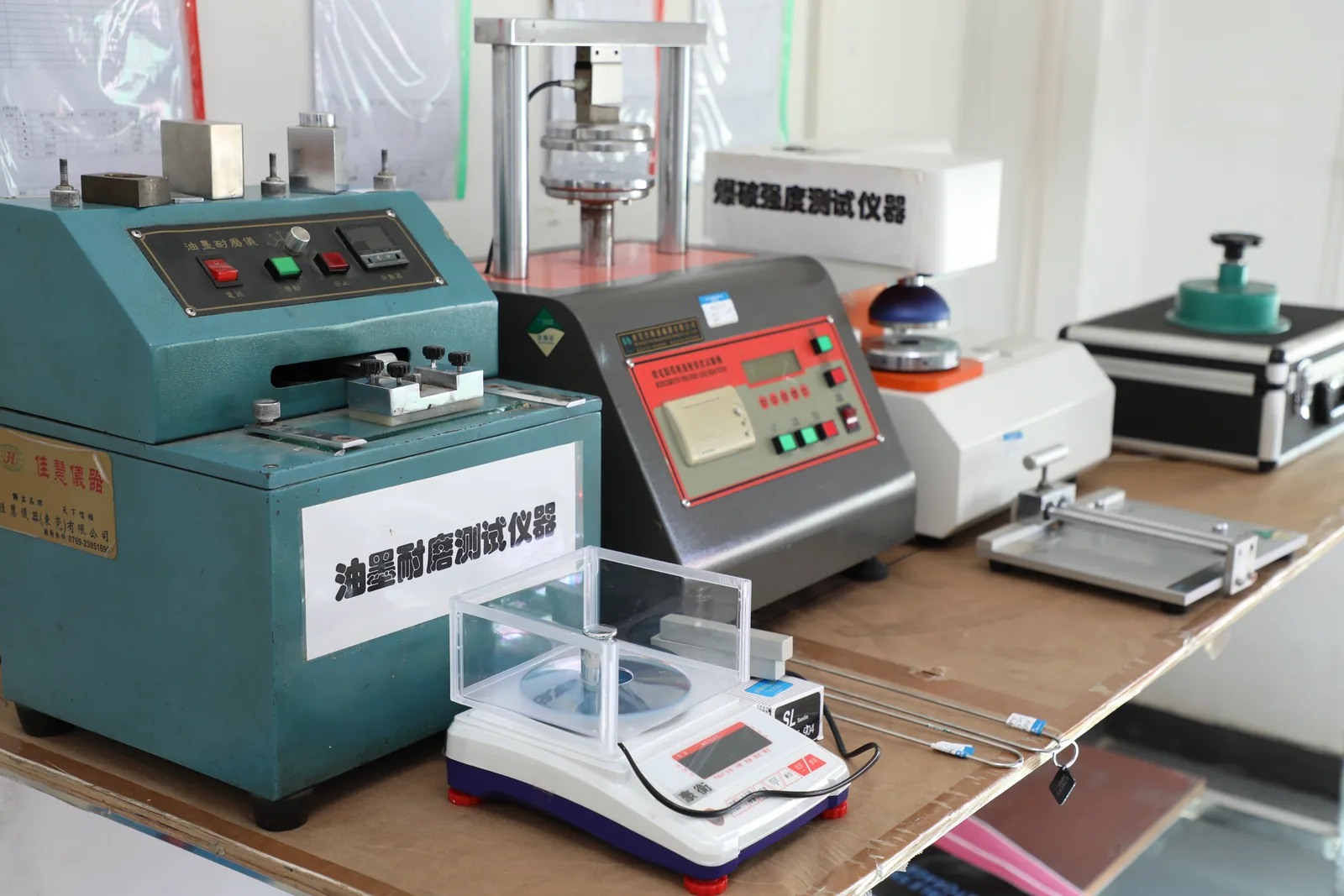
The factory photograph above shows packaging quality-testing instruments in JCL Packaging’s in-house lab. The published production workflow includes a full color-management system, in-line checks and final AQL inspection, with photo reports before packing. This matters for wine packaging because the approved dimensions, insert fit, print and finish must remain repeatable through the production run—not only on the first sample.
JCL’s equipment list includes Heidelberg CD102 four- and five-color offset presses, a Heidelberg PM74 press, CTP plate making, automatic die-cutting, automatic box gluing, film lamination, V-grooving, hot foil stamping and rigid-box visual positioning. These are the production stages behind the structural and decorative specification shown in the sample. The broader sequence is documented on the factory capabilities page.
Quality approval should cover three physical checks:
- The bottle and accessories load into the insert without forcing the closure.
- The finished lid, base or hinged format closes consistently around the packed product.
- The complete presentation pack fits the intended outer shipper or master-carton plan.
If the project will travel through parcel networks, tell the supplier at the inquiry stage. The packaging structure, outer protection and freight plan should be discussed together rather than after the gift box has already been approved.
Finishes and artwork that affect the specification
Wine packaging commonly uses hot foil stamping, embossing or debossing, textured specialty paper, metallic paper and laminated printed wraps. JCL also offers spot UV, reverse spot UV with foil and full-color combinations across its finishing capabilities.
Finishes do not replace dimensional engineering, but they must be planned on the approved structure. Artwork should be supplied as print-ready AI or PDF with fonts converted to outlines, images at 300 dpi and colors in CMYK, plus PMS references for spot colors. JCL supplies the structural dieline first and runs a pre-flight check before plating.
For gift programs that need a matching carrier, custom paper bags can be produced in kraft, art paper, black card, metallic or specialty paper with rope, ribbon, twisted-paper, flat-paper or die-cut handles. Keeping the box and bag specifications in one production brief helps align the material and finishing direction.
Production and delivery planning
Use the published planning figures below for the initial schedule:
| Item | JCL wine packaging specification |
|---|---|
| Bottle configurations | 1, 2, 3, 4 and 6 |
| Standard wine-box MOQ | 500 pcs per design |
| Wine-box sampling | 5–7 days |
| Wine-box production | 12–18 days after sample approval |
| Quote turnaround | Detailed quote within 24 hours |
| Shipping routes | Express, air, LCL/FCL sea freight |
| Delivery option | Worldwide DDP door-to-door available |
The production workflow is inquiry and quote, dieline and artwork, physical pre-production sample, mass production, QC inspection and worldwide delivery. Rush orders can be discussed when the production schedule allows, but a fixed launch date should be stated in the first brief.
To receive an accurate wine carton recommendation, send the bottle measurements, filled weight, bottle count, preferred box style, order quantity, destination postal code and required arrival date. If you already have a presentation box, dieline or physical sample, include it for structural review.
Send your bottle dimensions and project details to receive the recommended internal structure, insert direction, finished box specification and route-specific delivery quote.